

Getting your tires rotated won’t fix a steering wheel that shakes at highway speeds. Balancing your tires won’t correct a car that pulls to one side. And an alignment won’t stop every type of uneven tire wear.
Tire rotation, wheel alignment, and tire balancing serve different purposes, even though they’re often confused with one another. Knowing which problem each service addresses can help you make a better decision when your car starts showing signs of trouble.
Tire Rotation: Why Tire Position Matters
Your tires don’t all wear at the same rate. The front tires normally handle most of the steering forces, and on Front Wheel Drive vehicles, they also have to deal with the acceleration. This can cause faster wear on them than the rear tires.
Tire rotation is simply the act of changing tires to different positions in the pattern recommended by the vehicle manufacturer. This helps distribute tire wear more evenly and can help extend tire life.
Rotation won’t repair a damaged tire or correct an alignment problem. It helps manage normal tread wear before one or two tires become significantly more worn than the others.
When Are Your Tires Due for Rotation?
The right interval depends on your vehicle, tires, and driving conditions. Many vehicles need tire rotation every 5,000 to 7,500 miles, but your owner’s manual is the best place to check the recommended schedule.
You should also pay attention to how your tires are wearing. If the front tires look noticeably more worn than the rear ones, ask a technician whether rotation is due. Some tires have directional tread patterns or different sizes on the front and rear axles, so not every rotation follows the same pattern.
Keeping up with routine rotations is a useful part of car maintenance Wenatchee WA drivers can plan around regular oil changes and other scheduled services.
Wheel Alignment: When Your Wheels Aren’t Tracking Properly
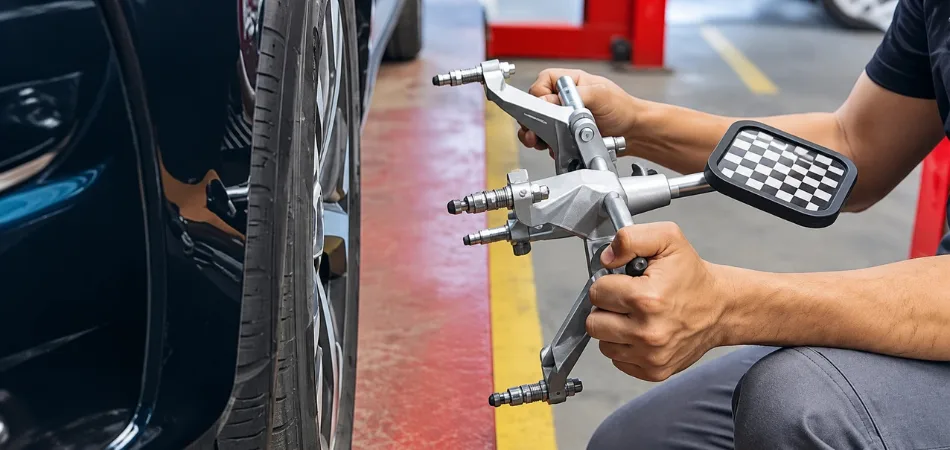
Wheel alignment deals with the angles of your wheels. A technician checks these angles against the manufacturer’s specifications and adjusts them where needed.
When the alignment is off, the car may pull to one side, or the steering wheel may be crooked when you’re driving straight ahead. You may also notice uneven wear on the edges of your tires. Sometimes the change is subtle. You may find yourself making frequent steering corrections without immediately knowing why.
Alignment isn’t the same as balancing. If the wheel angles are incorrect, balancing the tires won’t correct them. When these symptoms show up, tire alignment services Wenatchee WA drivers can access should include checking whether worn or damaged steering and suspension parts are contributing to the problem.
What Can Throw Your Wheel Alignment Off?
A hard impact with a pothole or curb may affect alignment. You might notice a change in steering soon after the impact, although not every bump causes a problem.
Checking alignment may be necessary for certain steering or suspension repairs. Worn components may allow the wheels to move outside their intended positions, so adjusting the angles alone might not solve the issue.
Uneven tire wear is another reason to have your alignment checked out. Tire pressure, tire damage, and suspension problems can also cause unusual wear, though. An inspection helps identify the cause instead of relying on symptoms alone.
Tire Balancing: What’s Behind That Steering Wheel Vibration?
A tire and wheel assembly needs its weight distributed evenly around its center. When one area is heavier than the other, the assembly can wobble as it turns. Tire balancing corrects this by measuring the imbalance and adding small weights where needed.
One common sign of an imbalance is vibration while driving, particularly at certain speeds. You might feel it through the steering wheel or notice it elsewhere in the vehicle, depending on which wheel is affected.
If your steering wheel shakes on the highway, don’t assume the tires simply need balancing. Tire damage, wheel problems, suspension issues, and other faults can produce similar symptoms. A technician can inspect the assembly and determine whether tire balancing Wenatchee drivers need is likely to address the problem.
How Do You Know If Your Tires Need Balancing?
Vibration is a common clue, but it isn’t the only reason to check balance. You may need balancing when new tires are installed, after a tire is repaired or remounted, or when a technician finds an imbalance during an inspection.
Pay attention to when the vibration happens. If it appears mainly at certain speeds, balancing is one possibility. If the car also pulls to one side or the tires show unusual wear, other checks may be needed.
Don’t ignore a sudden or severe vibration, especially if it starts after hitting something in the road. Have the vehicle inspected before continuing to drive at high speeds.
Can Your Car Need All Three Services?
Yes. These services address different issues, so one vehicle may need more than one.
For example, your tires might be due for rotation based on mileage, while vibration calls for a balance check. If the steering wheel also sits off-center, the alignment may need to be inspected separately.
The services can also be needed at different times. You don’t automatically need an alignment every time your tires are rotated or balanced. How you do it will depend on the car’s maintenance schedule, the condition of its tires, and how it drives.
When Should You Get Your Tires Inspected?
You don’t have to wait until a tire looks badly worn or the steering wheel starts shaking noticeably. Arrange an inspection if you notice:
- The car consistently pulls to one side.
- The steering wheel sits off-center on a straight road.
- You feel vibration at certain speeds.
- One tire is wearing faster than the others.
- You have hit a significant pothole or curb.
- You’re unsure when the tires were last rotated or balanced.
If you’re looking for car repair in Wenatchee, WA, our team can help with these concerns; start by explaining what you’ve noticed and when it happens. Those details help the technician decide which checks are needed.
At Align Pros & Express Lube, the goal is to identify the issue before recommending a service. Whether your tires need rotation, balancing, or an alignment check, the right inspection helps you avoid paying for work that won’t address the problem.
FAQs
-
Does tire balancing fix a car that pulls to one side?
Usually, no. Pulling can be caused by alignment, tire pressure, tire condition, or steering and suspension problems. Balancing primarily addresses uneven weight distribution in the tire-and-wheel assembly.
-
Can wheel alignment stop uneven tire wear?
If the wear is caused by incorrect wheel angles, then correcting the alignment will help prevent the problem from continuing. Existing tire damage or wear won’t be reversed.
-
Should tires be balanced every time they’re rotated?
No, not exactly. Rotation changes the position of the tires, while balancing corrects uneven weight in the tire-and-wheel assembly. Balancing may be needed if vibration develops or if an inspection identifies an imbalance.
-
What happens if you delay a needed wheel alignment?
An alignment issue can cause ongoing uneven tire wear and handling problems. Having it checked early can help identify the problem before it leads to additional tire wear.
Conclusion
Tire rotation, tire balancing, and wheel alignment may sound alike, but each one fixes a different problem. Rotation helps your tires wear evenly. Balancing helps with vibration at certain speeds. Alignment sets your wheel angles right, which matters when the car pulls to one side, the steering wheel sits off-center, or the tires wear unevenly.
Many of these signs can look alike, and the real cause is not always the one you expect. That is why a proper inspection comes first. If you need tire alignment services Wenatchee WA, the team at Align Pros & Express Lube can check the cause before suggesting any work, so you only pay for what your car needs.
Not sure which service your car needs? Tell us what you feel while driving, and we’ll help you find the right fix.