



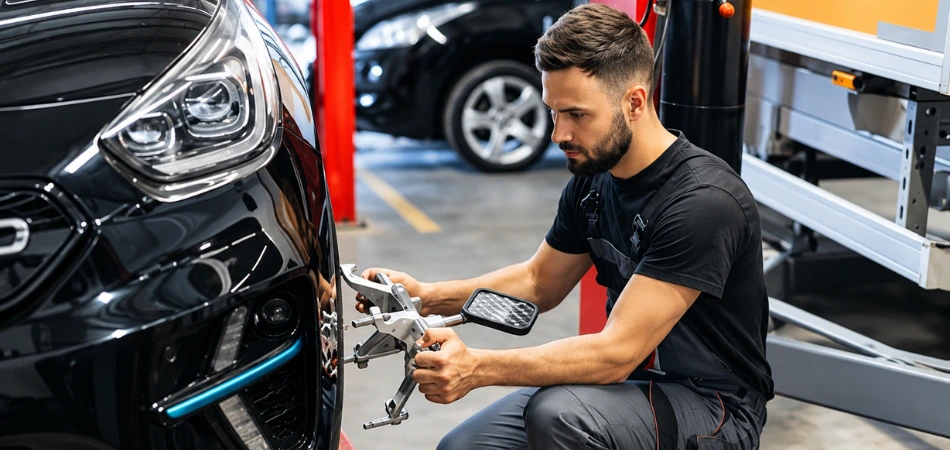
- Understanding Wheel Alignment and Suspension
- Signs Your Vehicle May Require a Wheel Alignment
- When Should You Consider Suspension Repair?
- What Do Toe, Camber, Caster, and Thrust Angle Mean?
- Which Suspension Components Can Affect Alignment?
- Why a Suspension Inspection May Be Needed Before Alignment
- When Should You Get Professional Help?
- Keep Your Vehicle Handling Properly in Wenatchee
- Frequently Asked Questions
Wheel alignment & suspension are separate elements of your routine car maintenance. Wheel alignment ensures that the wheels are set at the right angle, whilst suspension provides stability and comfort when driving.
Knowing how they work and when they can have an issue will help you prevent unnecessary wear and identify issues before they become a bigger problem. This guide will give you some basic information, the most common signs, and when Wenatchee drivers should seek professional services.
Understanding Wheel Alignment and Suspension
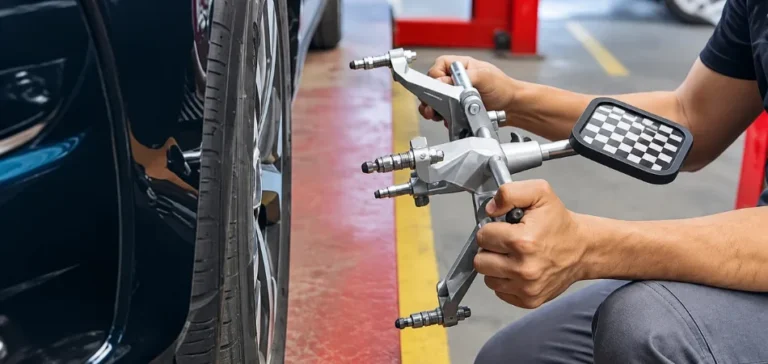
Alignment means adjusting wheel angles to match the manufacturer’s specifications. Get it right, and tires wear evenly, steering feels predictable, and road contact stays consistent.
Suspension is the broader system- springs, shocks, struts, and control arms that absorbs road impacts and keeps the tires in contact with the ground.
The two are connected. Worn suspension components shift wheel positioning. Incorrect alignment accelerates tire wear. Problems in one often show up in the other.
Signs Your Vehicle May Require a Wheel Alignment
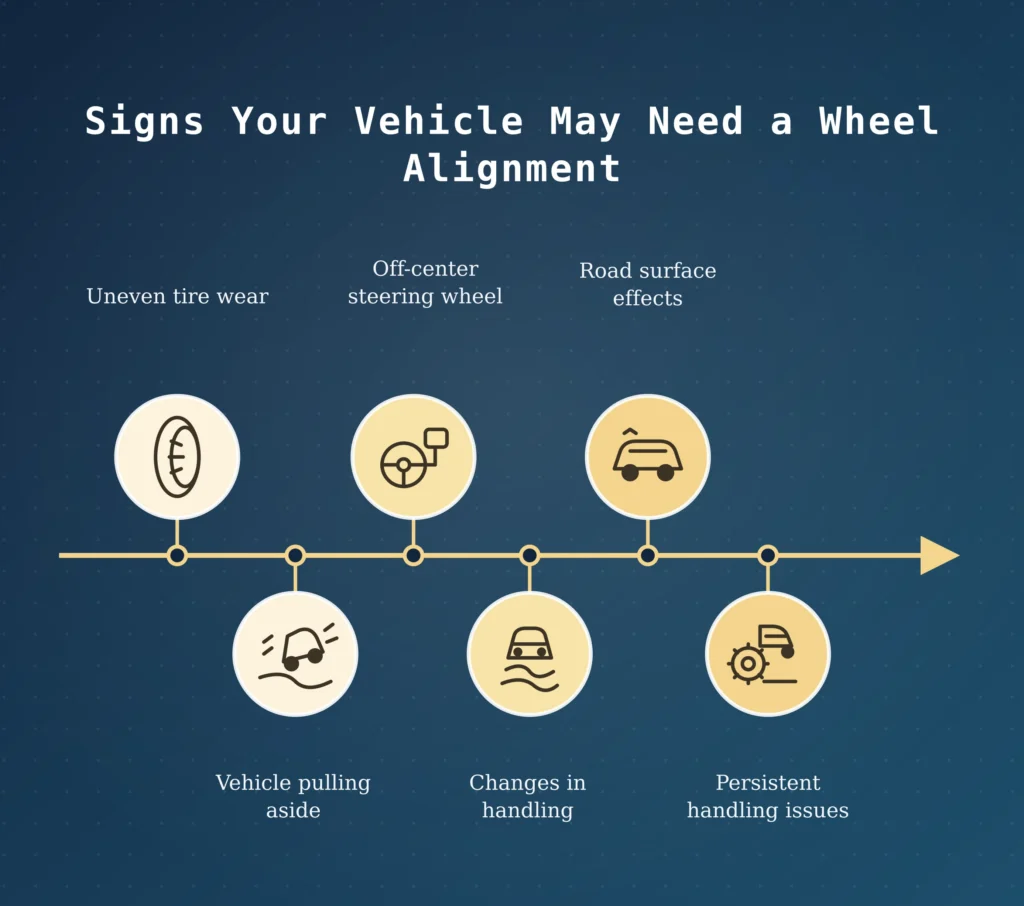
Some alignment problems develop gradually and aren’t obvious until the symptoms become hard to ignore.
Watch for:
- Uneven tire wear: one edge wearing down faster than the other
- Pulling to one side: the car drifts left or right on a level road
- Off-center steering wheel: sitting at an angle when you’re going straight
- Handling that feels off: less predictable through turns or on a straight road
Curbs, potholes, and rough road surfaces can knock alignment out. If you notice these symptoms, get it inspected. Drivers experiencing persistent pulling or uneven tire wear should have their tire pressure, wheel alignment, and suspension checked to identify the cause. For accurate results, consider professional tire and wheel alignment services in Wenatchee.
When Should You Consider Suspension Repair?
Suspension problems feel different from alignment problems. They often involve worn or damaged components rather than incorrect wheel angles.
Signs worth paying attention to:
- Excessive bouncing: the vehicle keeps moving after a bump; worn shocks and struts are often behind this
- Clunking or rattling: over uneven surfaces, this can point to worn suspension or steering parts
- Steering that feels wrong: too much play, stiffness, or sudden handling changes
- Irregular tire wear: suspension issues can cause this alongside or independently of alignment problems
None of these automatically confirm a suspension fault. An inspection determines what’s actually going on. If you’re looking at suspension repair in Wenatchee, knowing the underlying cause saves money on unnecessary replacements.
What Do Toe, Camber, Caster, and Thrust Angle Mean?
These are the measurements technicians work with during an alignment. They describe how wheels sit and point relative to the vehicle.
- Toe: whether wheels angle slightly inward or outward from above; wrong toe setting wears tires fast
- Camber: how much a wheel tilts inward or outward when seen from the front; incorrect camber causes uneven wear
- Caster: the steering axis angle viewed from the side; affects how stable the steering feels and how the wheel returns to center
- Thrust angle: the direction rear wheels point relative to the vehicle’s centerline; affects straight-line tracking
Each measurement gets compared against manufacturer specifications. What’s correct depends on the make, model, and suspension design; there’s no universal setting.
Which Suspension Components Can Affect Alignment?
Worn or damaged suspension parts can make it nearly impossible to hold a proper alignment, even after adjustment.
- Shocks and struts: control how the vehicle moves over bumps; worn ones affect both ride comfort and stability
- Control arms and bushings: connect suspension to the vehicle body; worn bushings allow movement that shouldn’t be there
- Ball joints: allow controlled movement between suspension parts; wear here affects wheel positioning directly
- Tie rods: linking the steering to the wheels; worn tie rods produce loose, imprecise steering
- Springs: support vehicle weight and absorb impacts; sagging springs change ride height and shift wheel geometry
If these components are worn, alignment adjustments should wait until they’re repaired. Otherwise, the alignment won’t hold.
Why a Suspension Inspection May Be Needed Before Alignment
Alignment adjustments don’t fix worn parts. If something in the suspension or steering is loose or damaged, adjusting wheel angles gives a result that won’t last.
A suspension inspection first identifies what’s actually worn: excessive movement in joints, deteriorated bushings, leaking shocks, damaged components. Where repairs are needed, those get done before the alignment is measured and adjusted.
That sequence matters. Aligning a vehicle with worn suspension components and then doing the suspension work means the alignment needs redoing. Getting the order right saves time and money.
When Should You Get Professional Help?
If the vehicle pulls consistently to one side, tire wear is uneven, suspension noises have developed, or handling feels different: get it inspected. Don’t wait to see if it gets worse.
After hitting a significant pothole or curb, particularly if handling changes afterward, an alignment check is worth arranging even without obvious symptoms.
Difficult steering or a vehicle that feels unstable are reasons to avoid driving unnecessarily and get professional advice quickly. A technician can work out whether it’s an alignment issue, suspension components, steering parts, or something else.
Keep Your Vehicle Handling Properly in Wenatchee
Changes in steering feel, tire wear patterns, and suspension performance are worth taking seriously. They usually mean something needs attention, and catching it early costs less than dealing with it later.
Alignment Pros & Express Lube provides wheel alignment and suspension services for drivers in Wenatchee, East Wenatchee, and the surrounding Wenatchee Valley. Notice alignment symptoms or suspect worn suspension components: arrange an inspection and find out what the vehicle actually needs.
Frequently Asked Questions
-
How do I know if my car needs a wheel alignment?
Uneven tire wear, an off-center steering wheel, or pulling to one side are the most common indicators. A professional inspection confirms whether adjustment is needed.
-
Can worn suspension components cause alignment problems?
Yes: worn ball joints, bushings, or control arms affect wheel positioning and often need repair before accurate alignment is possible.
-
What are toe, camber, and caster?
Toe is the direction the wheels point; camber is their inward or outward tilt; caster is the steering axis angle from the side. Each affects handling and wear differently.
-
Should suspension repairs come before alignment?
Generally yes, if worn components are affecting wheel positioning. Aligning the vehicle first and then doing suspension work means the alignment needs to be redone.
-
How often should alignment be checked?
Follow manufacturer recommendations, and check it after uneven wear or handling changes appear, or after a significant impact with a pothole or curb.
 General
Car Maintenance Guide for Wenatchee Drivers: 10 Must-Do Tips
Car maintenance doesn’t always mean costly repairs and visits to the mechanic. Simple habits like checking…
Read Guide
 Brakes
7 Signs You Need Brake Repair in Wenatchee, WA Before the Problem Gets Worse
The cost and extent of brake repairs often depend on how early a problem is caught.…
Read Guide
 Tires
Tire Rotation vs. Wheel Alignment vs. Tire Balancing: What Wenatchee Drivers Need to Know
Getting your tires rotated won’t fix a steering wheel that shakes at highway speeds. Balancing your…
Read Guide